Concrete is a perfect alternative to brick, concrete, vinyl, linoleum, wood, tile, and other flooring solutions; it can be polished, stained, and resurfaced in different finishes and textures. Plus, concrete flooring features countless benefits in terms of durability, fire resistance, maintenance, strength, and acoustics. Concrete is made using a blend of aggregate, water, and cement to form a composite material that hardens over time. Learn more about the benefits of polished concrete here.
Where Can You Utilize Polished Concrete?
Industrial/commercial concrete flooring solutions are a great option for warehouses, garages, factories, lobbies, public institutions, and basements. You can also use concrete as a base and then add a different type of flooring on top; your choice should be based on the structure’s purpose.
With advanced technology, flooring experts can create numerous design options with this basic flooring material. Today, industrial concrete can be painted, stained, polished, or textured using several techniques.
This article will focus on concrete polishing and everything you need to know about polished concrete.
What Is Concrete Polishing?
Concrete polishing is the process of grinding and treating concrete progressively to achieve the desired degree of smoothness and shine. The task requires high levels of expertise and professionalism. You might need the help of flooring experts, especially if you don’t know how to use grinders effectively.
The materials and tools needed for concrete polishing include:
- Diamond grinding and vacuum equipment
- Grits of diamond or disks
- Polishing pads
- Gloves
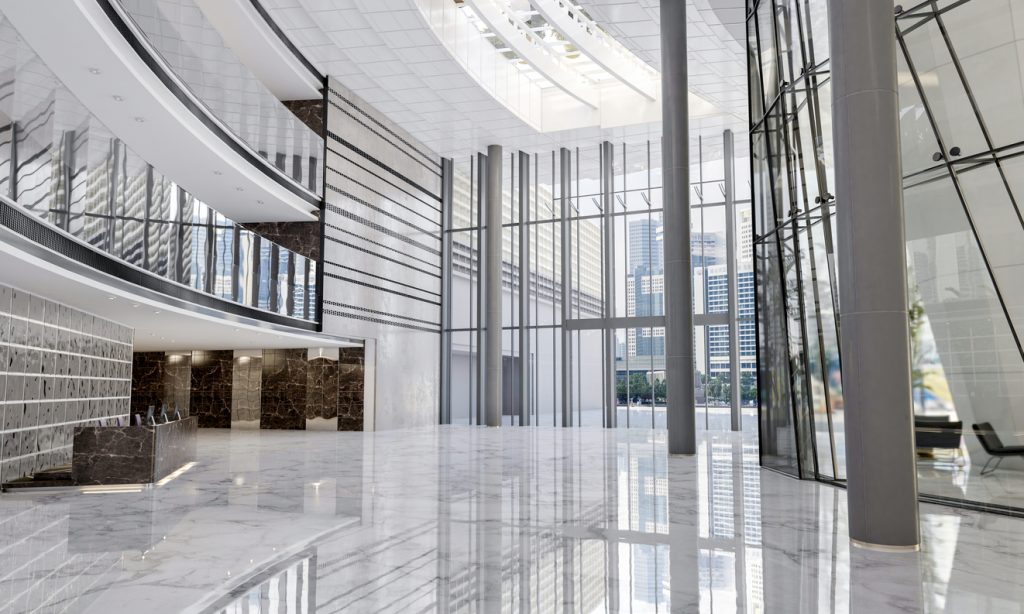
Polished concrete floors feature a mirror-like, shiny finish. Design options are unlimited; you can choose your best color or make patterns using unique objects, embed aggregates, or even saw cuts on the flooring material before polishing. Since polished concretes require minimal maintenance, they are the most popular option for commercial buildings.
Levels of Concrete Polishing
You can control the levels of sheen and aggregate exposure of your concrete floor using different levels of concrete polishing. The reflectivity of your floor range from glassy finish to matte fining or something in between.
- Level 1 (below 100-grit resin bond): Your floor will look somehow hazy with minimal to zero reflection or clarity.
- 2 (400-grit resin bond): It features a low-sheen finish. You will observe a slight reflection when you look at the floor from an elevated position, precisely 100 feet above the surface.
- 3 (800-grit or higher): Produces a higher level of sheen and light reflectivity. Your floor will reflect overhead and side lighting from 30 to 50 feet.
- 4 (up to 3,000 grit): Features the highest level of shine and reflectivity. You will clearly see your reflection when standing above the surface. The floor will also look wet from different angles.
Methods of Polishing Concrete
There are two primary methods of polishing concrete; the dry polish method and the wet polish method, each with some advantages and disadvantages. Regardless of the polishing method used, smoothening your floor with a grinding machine comes first. This process involves several stages demanding different grind coarseness to achieve the standard of gloss and smoothness you desire.
Dry Polish Method
This method is perfect if you want a high-gloss shine for your surface. You will need a large corded electrical polishing machine for open floors and a smaller hand machine for hard-to-reach areas. Although the name says otherwise, you will add some water after every stage to eliminate dust.
Pros
- Better in terms of condensing and hardening the slab
- It gives a higher shine
- Ideal for both open and hard to reach surfaces
Cons
- More expensive than the wet polish method
- Prolonged downtime
Wet Polished Method
As the name suggests, this polishing method requires you to use water between stages. However, your flour will have a low luster instead of a glassy shine since the polishing disks have the same grit sizes in all polishing stages.
Pros
- Dust-free process and prevents dust contamination
- Shorter downtime
- Cheaper compared to the dry method
- Environmentally friendly; can use propane-fueled tools
Cons
- Low gloss shine
- It can only be applied to large, open spaces
- Cleaning the wet slurry left on the floor is time-consuming
Which Is the Best Method for Your Building?
If you are in the food and beverage industry, you might have to go with the wet polish method; according to the law in most states, you should apply a dust-free process. And if you want to appeal to your clients with a high-shine surface, choose the dry polish method.
Other factors that may affect your choice include your location, physics, expected results, and your timetable. However, it would be best to consult a flooring expert to help you determine the best method for your facility.
Concrete Polishing Process
Determining Surface Hardness
Use the MOHS test kit or MOHS concrete hardness tester to determine your floor hardness. You can test three or more areas of your surface to get an average figure.
Surface Preparation
Remove blemishes, light coatings, blemishes, and minor pits from the floor using a grit metal bond. The process takes three to four steps to achieve floor flatness.
Eliminate Metal Tool Marks
Use a 200, 100, or 50 grit transitional tool to remove all metal tool scratches and create a floor ready for polishing.
Harden and Densify the Concrete
Use one of the three main densifiers (Sodium silicate, lithium silicate, and potassium silicate) to harden your concrete floor and offer additional protection from staining and water penetration.
Fine Grinding the Surface
Use diamond abrasives bonded in a resin or plastic matrix to fine grind the concrete surface until you achieve the sheen you desire. You can start with 200 grit and then gradually shift to 400 and 800 grit. But for a high gloss finish, use 1500 grit. Ensure that you remove dust after every stage. Finally, burnish the surface using 3000 grit.
Seal the Polished Surface
Seal and protect the final look by adding a commercial stain-guard material and a surface wear protector. This step is critical if the floor is prone to chemicals, oil, or grease stains.
Advantages of Polished Concrete Floors

Anti-Slip
Polished concrete floors are less slippery than ordinary industrial concrete, polished marble, waxed linoleum, or hardwood floor. It’s therefore perfect for floors that are highly exposed to water spills.
Anti-Dust
Polished concrete is dust resistant, making it an excellent option for people who are allergic to dust. Perfect for hospitals, schools, and other public places.
Cost-Effective
Concrete polishing is cost-effective in the long run. Other flooring options require chemicals or wax to clean; regular refinishing, stripping, and waxing can be expensive. However, you only need water and soap to clean your polished concrete floor.
Resistant to Mold and Moisture Damage
Polished concrete can’t be damaged by moisture and doesn’t support bacteria and mold growth. It’s, therefore, an excellent option for buildings that host people with asthma or allergy vulnerability, like hospitals.
Durable
A polished concrete floor can serve you for an extended period, around 100 years, compared to other flooring solutions with a life span of between ten to twenty years. However, just like other commercial concrete flooring solutions, you can renovate it once in a while when you want to change the design or style.
Numerous Designs
There are numerous dyes and stains for polished concrete surfaces available in various aggregates and colors. You can engrave or stain your polished concrete floor to improve its appearance or add a character that suits your tastes and preferences. It enhances the aesthetic if you use stain and high gloss polish guard.
Polished floors also complement modern-style rooms and create a chic and welcoming environment. You don’t have to spend a fortune to achieve modern standards with concrete polishing.
Disadvantages of Polished Concrete Floors
Stains
Deep stains can be formed during concrete preparation when pouring the concrete slab. However, this doesn’t happen after polishing and sealing.
Discoloration
Polished concrete floors can change color if not well maintained. Fortunately, maintaining these floors is cost-effective and straightforward.
Costly Repair
While polished concrete floors are affordable, they might not be the cheapest solution if repairs are needed.
Concrete Maintenance
As mentioned above, polished concrete floors are durable; however, you must still clean and maintain them properly-this is particularly necessary if you install them in high-traffic retail or commercial facilities. Luckily, these floors are easier to maintain than other commercial concrete flooring solutions; they don’t need sealing or waxing.
Proper maintenance consists of frequent wet mopping using water and soap and daily dust mopping to eliminate grime and dirt. You can also use a floor cleaner to suspend the dirt particles for easier cleaning. The specific maintenance and cleaning schedule for polished concrete floors depends on the building traffic. So if you are installing them in high traffic buildings, frequent cleaning is mandatory.
Additional cleaning tips include:
- Clean stains and spills from your polished concrete surface as soon as possible to avoid permanent staining
- Use neutral floor cleaners
- Allow the cleaner to settle on the floor for a while before mopping or vacuuming
- Ensure that the cleaner doesn’t dry on the floor
- Use a microfiber pad when dust mopping
- Use mob and bucket to clean small areas and an automatic floor scrubber for larger surfaces
Conclusion
A polished concrete floor is a perfect choice for commercial and industrial spaces if you are looking for an affordable, durable and chic flooring solution. However, concrete polishing isn’t a straightforward DIY project; it requires flooring expertise, special diamond tooling, and heavy equipment.
How about you let a professional flooring contractor handle your project? Our team has the knowledge and experience needed to achieve excellent results. We are in Colorado and operate in Denver, Littleton, Fort Collins, Loveland, Aurora, Longmont, and Boulder. Contact us today!